Why Do We Get Hiccups? Causes and Science Explained
“Hic… hic… hic!” We have all experienced that sudden, annoying sound that seems to appear out of nowhere. Hiccup attacks might occur after a fast consumption of food or beverages or even excessive laughter.
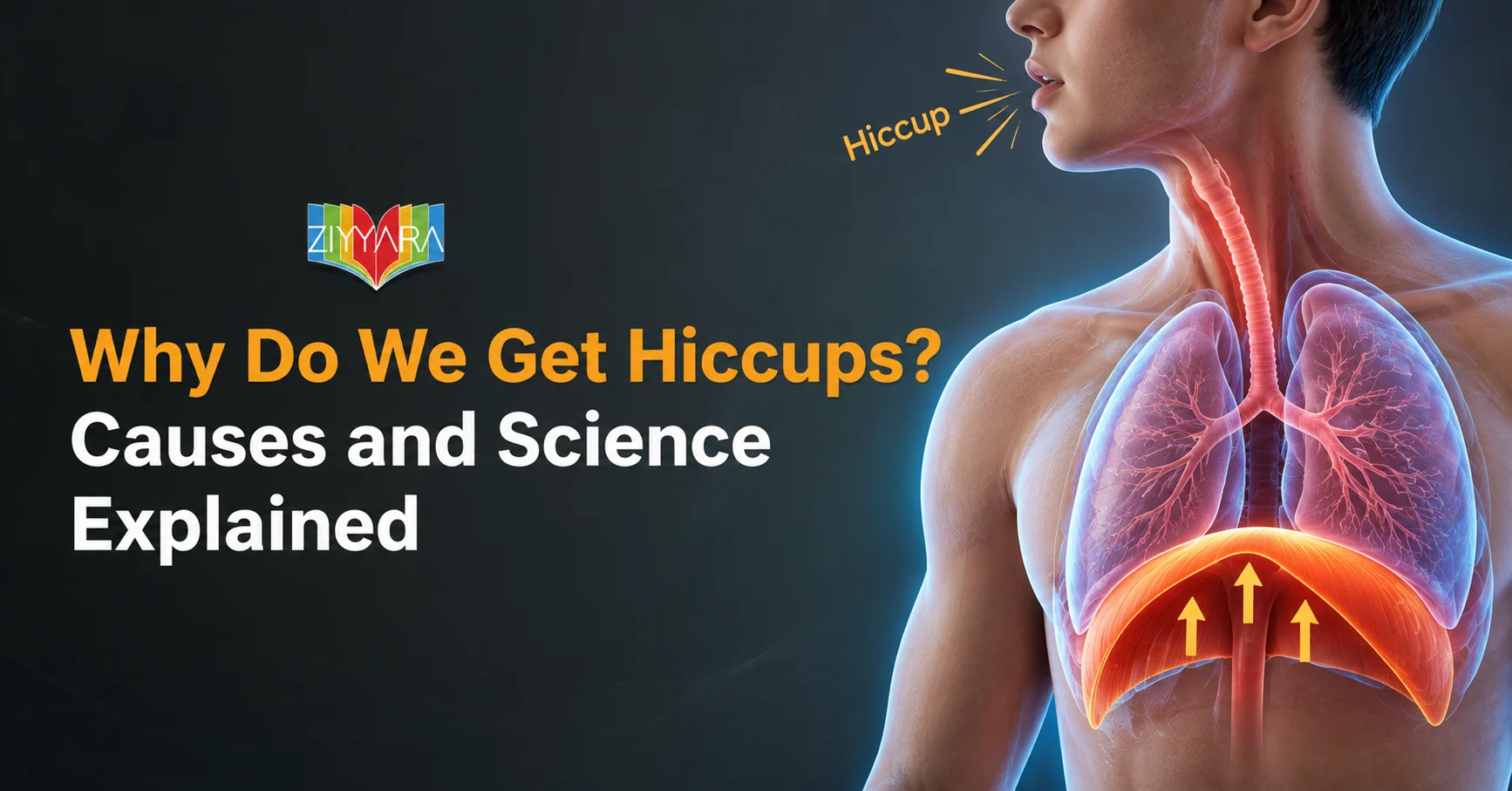
The solution to the mystery of hiccup lies in an important muscle used for respiration known as the diaphragm.
In this guide, you will learn about what hiccups are, what causes hiccups, the role of the diaphragm in hiccups, what causes the “hic” sound in hiccups, and situations where hiccups require a doctor’s intervention.
What Are Hiccups?
Hiccups can be described as the spontaneous and recurrent spasms of the diaphragm. The diaphragm refers to the domelike muscle situated just beneath the lungs, which facilitates respiration.
When the diaphragm experiences an abrupt spasm, the air enters the lungs, and within a split second, the vocal cords close, causing a ‘hic’ sound.
In simple words:
Irritation or stimulation → sudden diaphragm contraction → brief closure of vocal cords → “hic” sound
Most ordinary hiccups last only a few minutes and disappear on their own.
Why Do We Get Hiccups?
The occurrence of hiccups doesn’t have to be associated with a single factor. There are many different situations that may lead to hiccups.
Possible causes and triggers of hiccups are the following:
Consumption of a large amount of food and eating fast
Drinking carbonated beverages
Swallowing a large quantity of air
Temperature fluctuations
Laughter and nervousness
Irritating foods or drinks
Alcohol consumption
Stimulating actions on the region of the stomach and diaphragm
To make an example, think about the situation when after having a big meal you drink a carbonated beverage. The consequence is that your stomach gets distended.
The diaphragm muscle plays a significant role in breathing. As you inhale, the diaphragm contracts and pulls down, creating more space in the chest cavity so that air can pass into your lungs.
In case of a hiccup, on the other hand, your diaphragm muscle contracts involuntarily.
Step 2: Air rushes into the lungs
This leads to a rapid intake of air into the lungs.
Step 3: The vocal cords close
Just at that moment, the space between your vocal cords closes up.
Step 4: You hear the “hic”
It is this interruption of air flow that produces the sound of a hiccup.
Thus, whenever you are asked why you get hiccups, you will know that
“a hiccup is an involuntary diaphragm spasm followed by vocal cord closure.”
Why Does Eating Too Fast Cause Hiccups?
Eating fast will cause you to swallow more air than normal. Eating a big meal will make your stomach expand.
This may irritate parts and nerves of the body that trigger hiccups. The same happens when taking carbonated beverages since they contain gas.
Therefore, eating slowly and not taking many fizzy beverages may be a way of minimizing hiccups.
Are Hiccups Dangerous?
Usually, no.
In most cases, short spells of hiccups are not considered serious conditions and are likely to resolve on their own. However, when hiccups persist for an extremely long time, they differ from short hiccups that practically all people experience at one point in time.
As suggested by Mayo Clinic, it is advisable to seek advice from a medical expert if hiccups last for more than 48 hours or if they have become so severe that they prevent the person from eating, sleeping, or breathing.
FAQs
What is the main cause of hiccups?
Hiccups result from involuntary contraction of the diaphragm, which is immediately followed by the closure of the vocal cords. Some of the common causes include overeating, drinking carbonated drinks, taking in too much air and sudden emotional or environmental changes.
Why does the “hic” sound happen?
The sound results from the sudden closure of the vocal cords after the involuntary contraction of the diaphragm and intake of air to the lungs.
How long do normal hiccups last?
Normally, most hiccups resolve on their own within a short period of time. Hiccups that last for more than 48 hours should be reported to a health care provider.
Is the diaphragm involved in hiccups?
Yes. The diaphragm is the main muscle responsible for producing hiccups.
Learn Beyond Memorising the Textbook
Learning becomes much easier once there is an association made between textbook theory and real-world situations, no matter how trivial those situations may be – such as the process of having a hiccough.
With Ziyyara, learning science theories becomes much easier through personalized online tutoring sessions. Instead of studying diagrams and theories from books, the questions of the students are solved and they get a grasp of tough concepts.